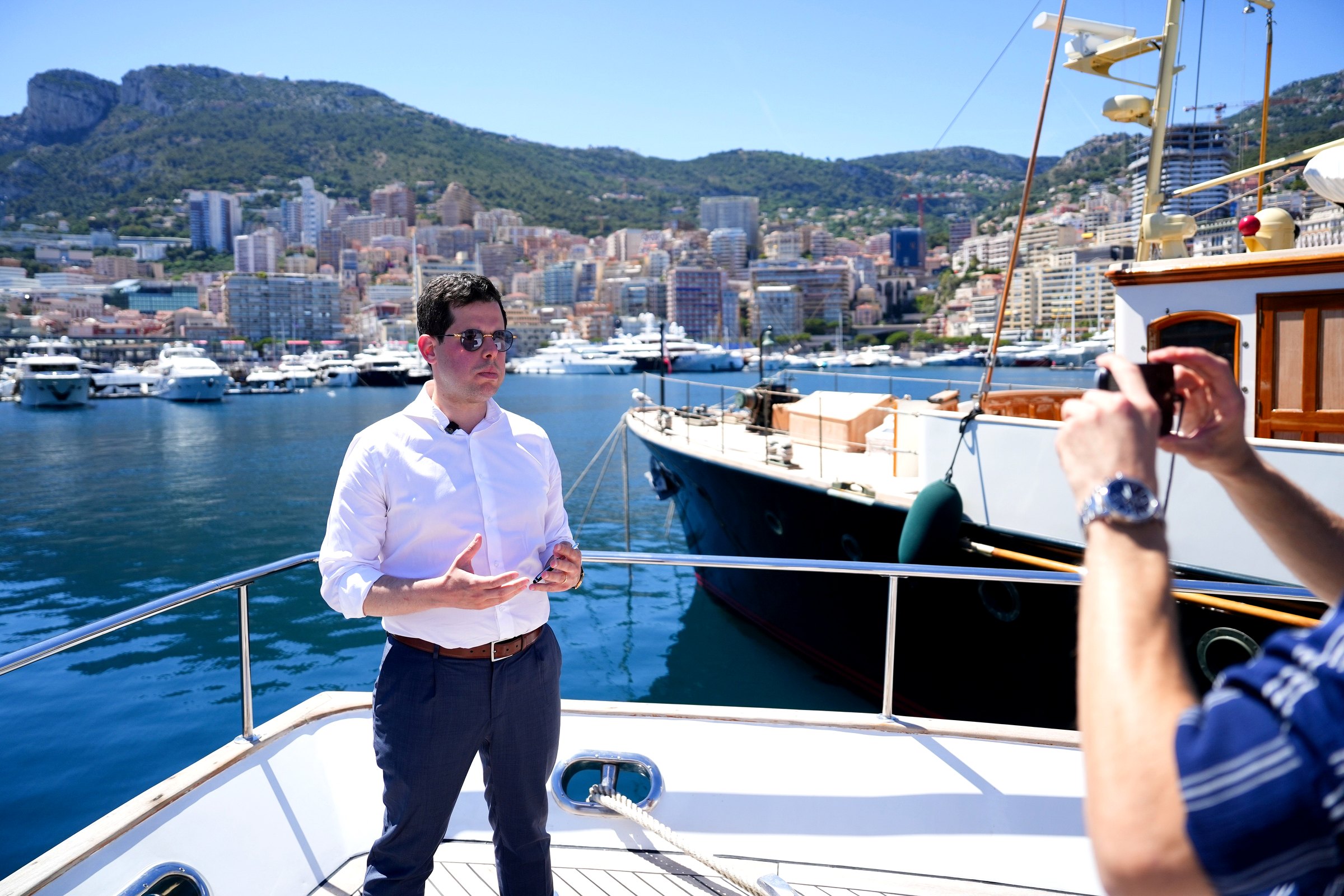
On 13 June 2026, Altherum was introduced to its first circle of investors aboard the yacht Zaffiro, moored at Port Hercule in Monaco. The evening was built as a working session rather than a product demonstration: an invitation-only gathering of entrepreneurs, family offices, wealth managers and private bankers, centred on a live tokenized sale of curated art and collectible pieces, with a share of transaction proceeds donated to Fondazione Francesca Rava. Class CNBC followed the evening with dedicated coverage from Monte Carlo. What follows are our own observations from that room — presented as observations, not as market data.
An evening built around objects, not screens
Altherum did not begin with a technology roadmap. It began with a question about cultural value: whether a work of art, a rare watch or a piece of sporting history must belong to one person, or whether ownership can be shared, professionally and legally, without diminishing what makes the object matter. That question shaped the launch. Every conversation started from a physical asset on the table — a signed Michael Schumacher helmet, a graded first-edition card, gemstones examined under a specialist's loupe — rather than from a screen. The technology stayed where we believe it belongs: in the background, as infrastructure.
What we heard from the room
Three themes recurred in the conversations of the evening. They are our reading of the discussions, not a survey.
The questions were about the asset. Very few guests asked how the ledger works. They asked about provenance, condition, appraisal methodology and exit channel — the questions a private-market professional asks anywhere. We took that as a sign that real-world asset tokenization is being evaluated on the same terms as any other private-market position.
Institutional standards were treated as a baseline. Independent verification, insured professional custody and documented legal structuring were assumed, not requested as extras. Digital records lower none of those requirements.
Single accountability mattered. Guests repeatedly returned to who answers for the full chain — selection, structuring, custody, administration and eventual sale. Fragmented responsibility was the concern most often voiced.
From the evening to the working platform
Altherum was built to occupy that position: a European house that takes each opportunity on its own terms and treats digital infrastructure as a service to the asset. That approach is organised today into three distinct structures — fractional co-ownership of selected physical assets, club deals through dedicated SPVs, and a securitisation strategy reserved to professional investors — each with its own documentation, eligibility rules and process.
What we took away
The launch did not prove a market thesis, and we make no claim that it did. It told us which questions our first circle of investors considers non-negotiable, and it confirmed the discipline we intend to be judged on. For a structured overview of how an asset travels from selection to exit, see How It Works; for the educational foundations, start with our Library. Capital is at risk in every structure we operate, and each opportunity is governed by its own documentation.